If you’ve been Googling DSP salary for the last hour, jumping from one outdated article to another, I get it. Most pages just throw a vague range at you and move on. I wanted something better, so I dug into the 7th Pay Commission matrix, cross-checked current DA rates, and even spoke to a couple of people who track this data closely. What follows is the actual breakdown — basic pay, allowances, deductions, and what genuinely lands in your bank account every month.
Let’s get into it properly.
Who Exactly Is a DSP and Why Does This Role Pay So Well?
Before jumping into numbers, let’s clear up the basics. A DSP, or Deputy Superintendent of Police, sits at Level 10 of the pay matrix — the same entry level as IAS and IPS officers. That alone tells you something about how this role is positioned within the government hierarchy.
Officers reach this rank either by clearing a State Public Service Commission exam (like BPSC, UPPSC, MPPSC, or RPSC) or by getting promoted from the Inspector rank after roughly 15–20 years of service. There’s also a third path — qualifying for the IPS through UPSC, where DSP becomes your probationary starting point before moving up to SP.
Breaking Down the Salary Structure, Piece by Piece
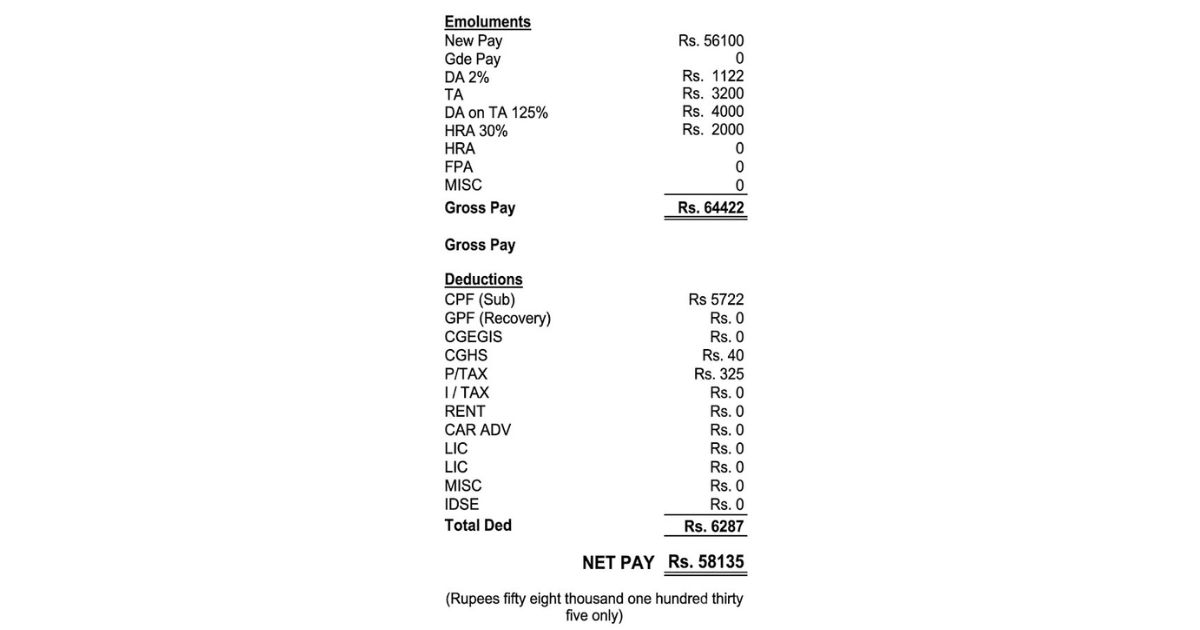
In my experience researching government pay structures, the biggest mistake people make is looking only at the headline figure. The real DSP salary per month is built from several moving parts, and understanding each one helps you avoid surprises later.
Basic Pay: This starts at ₹56,100 under Level 10 of the pay matrix. Every component above this is calculated as a percentage of this base, so it matters more than people realize.
Dearness Allowance (DA): This varies depending on which state you’re posted in. Bihar sits around 46%, Uttar Pradesh and Rajasthan around 50%, and Maharashtra closer to 53%. Meanwhile, Delhi Police officers, being under central government rules, receive a higher 57% DA. As a result, two officers at the exact same rank can take home noticeably different amounts depending purely on their state posting.
House Rent Allowance (HRA): If government quarters aren’t available, officers receive HRA instead, typically ranging between 8% and 24% of basic pay depending on the city classification.
Additional Allowances: Kit allowance, ration money, orderly allowance, and in some cases a hardship or risk allowance for postings in sensitive or naxal-affected regions. Individually these seem small, but together they can add another ₹5,000 to ₹15,000 to your monthly income.
So, What’s the Actual DSP Salary Per Month?
Here’s where most articles get vague. I won’t do that. Below is a realistic in-hand calculation for a fresh DSP posted in a state capital with average DA:
| Component | Amount (₹/month) |
| Basic Pay | 56,100 |
| Dearness Allowance (avg. 50%) | 28,050 |
| House Rent Allowance (16%) | 8,976 |
| Kit Allowance | 2,000 |
| Ration Money | 2,400 |
| Orderly Allowance | 2,000 |
| Gross Salary | 99,526 |
| Less: NPS Contribution | -8,415 |
| Less: State Insurance | -500 |
| Less: Professional Tax | -200 |
| Less: Income Tax (estimated) | -8,000 |
| Net In-Hand | ~82,400 |
So, a fresh DSP salary in-hand typically lands somewhere between ₹75,000 and ₹92,000 per month, even before counting the official vehicle, driver, and housing benefits that come bundled with the rank.
How Your Salary Grows Over the Years
After researching this deeply, one thing stood out — the growth trajectory here is unusually predictable compared to most government roles. There’s no guesswork involved; the pay matrix tells you exactly where you’ll land at each stage.
| Career Stage | Timeline | Monthly In-Hand (₹) |
| DSP (Entry, Level 10) | 0 years | 75,000 – 92,000 |
| DSP (Experienced) | 5 years | 85,000 – 1,05,000 |
| Additional SP (Level 11) | 5–8 years | 1,00,000 – 1,25,000 |
| SP (Level 12–13) | 12–18 years | 1,35,000 – 1,75,000 |
| DIG (Level 14) | 20–25 years | 1,70,000 – 2,15,000 |
Notice how even without a single promotion, annual increments of around 3% on basic pay quietly push your earnings upward every year. Over two decades, that alone adds a meaningful chunk to your total career earnings.
How Does This Compare With Similar Roles?
I explored a few comparable positions to see how a DSP salary stacks up against roles at the same pay level or nearby ranks.
| Role | Monthly Salary Range (₹) | Key Difference |
| Sub-Inspector (SI) | 43,000 – 55,000 | Four levels below DSP, no vehicle or quarters |
| IPS Probationary DSP | 78,000 – 95,000 | Same level, but central DA and faster promotion |
| SDM / BDO | 75,000 – 92,000 | Identical pay level, different job nature |
| CBI DSP | 82,000 – 1,00,000 | Central DA plus special duty allowance |
In other words, the basic numbers across these roles look similar, but the perks, posting nature, and promotion speed differ quite a bit.
Perks That Don’t Show Up in the Salary Slip
A salary figure alone never tells the full story. On top of the cash component, DSPs typically receive:
- An official vehicle with a dedicated driver
- Government quarters or a furnished residence
- Comprehensive medical coverage for the officer and family
- NPS contributions that build a sizeable retirement corpus over time
- Generous leave entitlement, including encashable earned leave
- Gratuity after five years of continuous service
Therefore, when people compare this role purely on take-home pay against private-sector jobs, they often miss a big chunk of the real value sitting in these benefits.
Where People Usually Search Next: DSP Full Form and Eligibility
Interestingly, a huge number of people who search for DSP salary also search for the DSP full form, which is simply Deputy Superintendent of Police. It’s worth mentioning here because plenty of readers land on salary pages without even knowing what the abbreviation stands for, especially students just starting their exam preparation journey.
If you’re exploring this path, eligibility generally requires a graduate degree, a minimum age limit set by your respective state commission, and clearing the preliminary, mains, and physical/medical rounds of the State PCS exam.
The Honest Trade-Offs You Should Know About
I noticed that most articles either oversell this career or completely ignore its downsides. Here’s a balanced picture:
What works in its favor:
- Strong entry-level pay compared to most state government roles
- Long-term job security with pension and NPS benefits
- A clearly defined promotion ladder up to SP and DIG
- Genuine social respect and administrative authority
What you should prepare for:
- Extremely high competition — often lakhs of applicants for a few hundred posts
- Irregular hours; policing doesn’t pause for personal plans
- Postings in sensitive or high-risk districts are common early in your career
- State DA usually trails central DA by a noticeable margin
Is Pursuing a DSP Career Actually Worth It in 2026?
Here’s my honest take. If financial security, a structured career path, and government-backed benefits matter more to you than rapid wealth creation, this remains a solid choice. The DSP salary isn’t going to make anyone wealthy overnight, but it offers a comfortable, stable life with growth built right into the system.
On the other hand, if your priority is maximizing income within the shortest time frame, the private sector might suit you better — though usually at the cost of job security and predictable hours.
Conclusion
The DSP salary structure rewards patience and long-term thinking more than quick gains. Between the steady increments, structured promotions, and benefits that extend well beyond the monthly paycheck, it’s a career that builds value gradually rather than all at once. If you’re preparing for this path, go in with realistic expectations about both the financial rewards and the demanding nature of the job — that combination of clarity will serve you far better than chasing a single headline number.
People Also Ask
A fresh DSP typically earns between ₹75,000 and ₹92,000 in-hand per month, including basic pay, DA, HRA or quarters, and additional allowances.
DSP stands for Deputy Superintendent of Police, a Level 10 gazetted rank in state police forces across India.
Yes. After five years, in-hand pay generally rises to between ₹85,000 and ₹1,05,000, and further increases come with promotions to Additional SP, SP, and DIG over the course of a career.
The difference mainly comes from varying state DA percentages. States with higher DA, like Maharashtra, pay slightly more than states with lower DA, like Bihar.
Both roles sit at the same pay level with nearly identical basic pay. The minor difference comes from role-specific allowances rather than the base salary itself.
Other Related Links: